Make an enquiry or download the Planning Checklist.
We’ll reply with the best-fit system for your space, age range and group size.
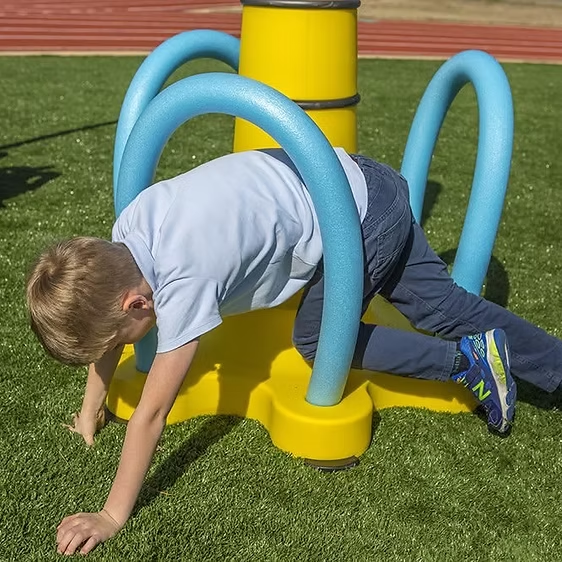
A. Yes. Snug Play is designed for flexible use in both indoor and outdoor settings. The pieces are made with non-marking materials, so they can be used in school halls, gyms and kids’ club spaces, as well as in designated outdoor play areas. If you tell us about your space and age range, we can recommend the best kit and share simple safe-use guidance.
Snug Play is flexible, but the guide below helps you plan comfortable space for movement and group play.
There is no fixed limit on the number of children who can use a Snug Play system at once. We recommend completing a site-specific risk assessment and following your normal supervision policies. However, the following ranges provide a helpful guide based on system size and typical usage.
A. Snug Play is not classified as fixed play equipment, so it doesn’t require a specialist safety surface in the way permanent playground equipment often does. That said, every setting is different—so we’re happy to advise on the most suitable space and supervision for your environment.
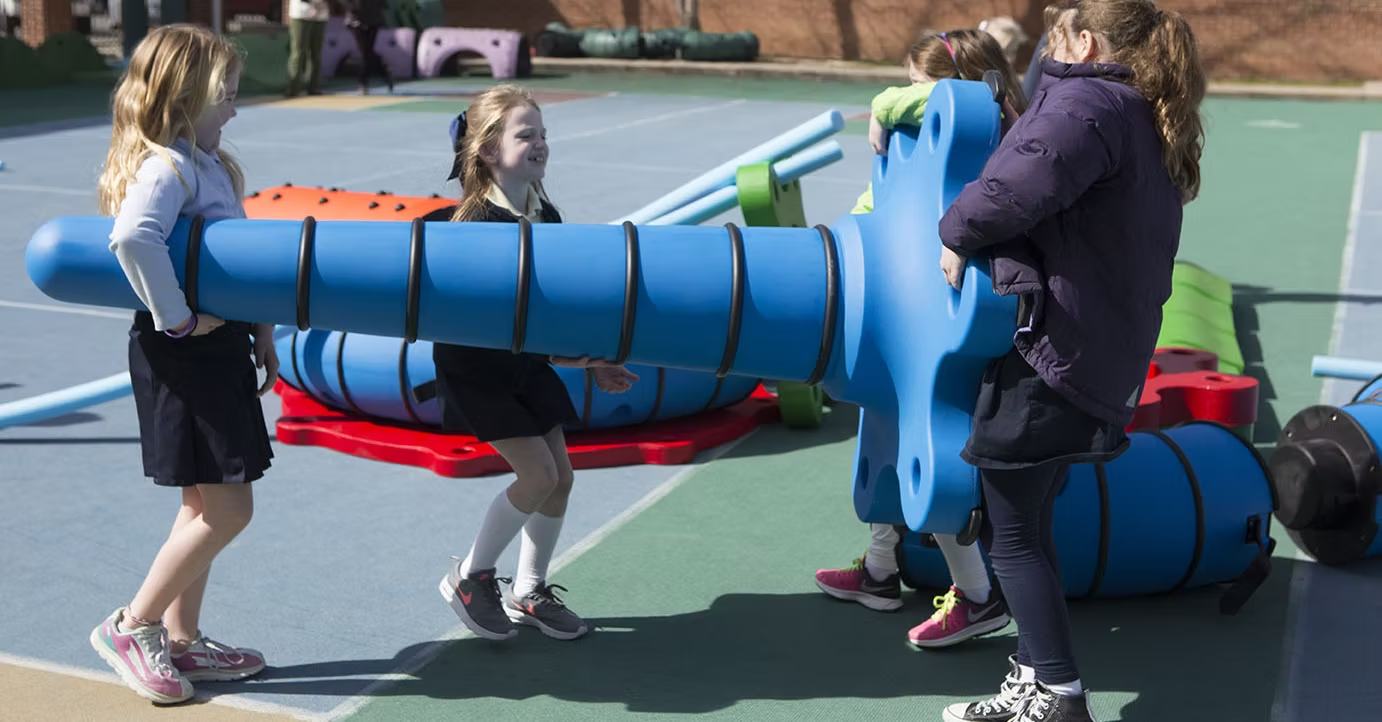
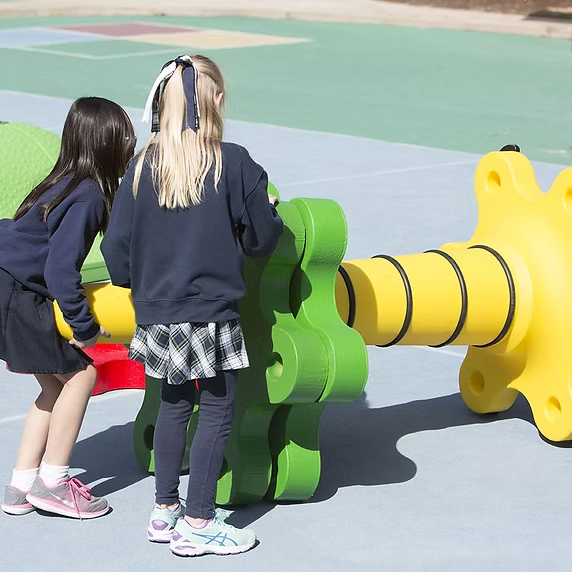
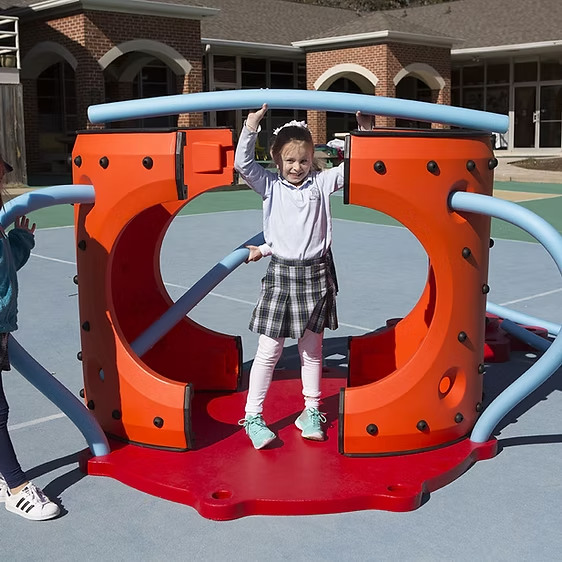
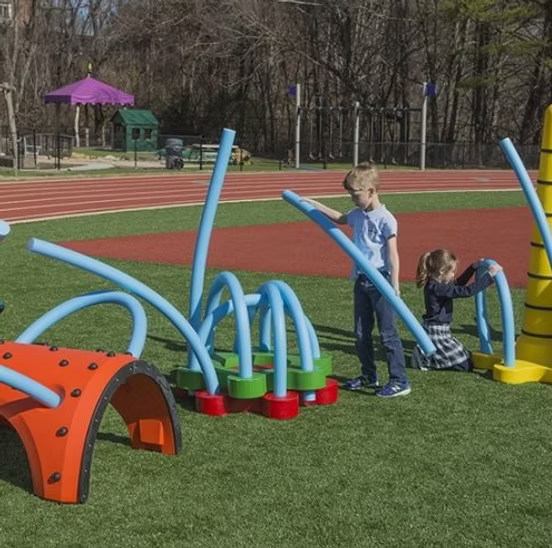
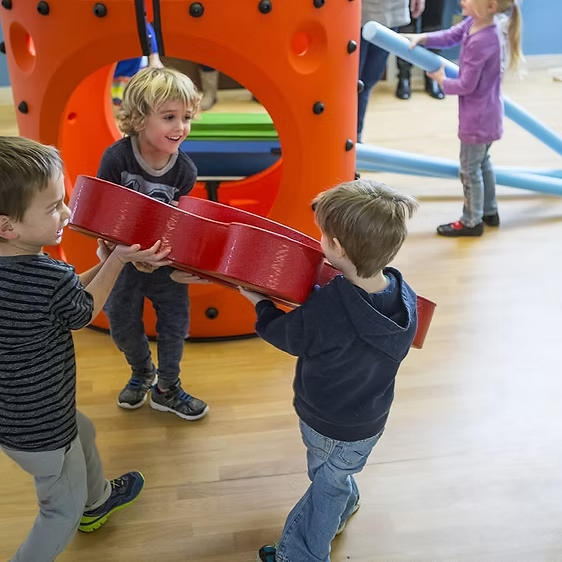
A.Yes. Snug Play is designed for children to move and rearrange. Each kit includes “loose parts” that children can lift, carry and combine to create new play set-ups. Some kits also include larger feature pieces that help anchor play and shape the space. This flexibility encourages cooperation, communication and shared problem-solving as children build and create together. If you tell us the age range and group size, we’ll recommend the best system (Learner, Primary, Elementary, Intermediate, Advanced or Expert).
A. Like most play surfaces, extra care is needed in wet conditions. We recommend sensible supervision and adapting play if surfaces are wet or slippery.
A. Yes, Snug Play is made from water-resistant materials and can be left outside in all types of weather. For best long-term appearance, we recommend storing the pieces when not in use rather than leaving them outside permanently, especially in prolonged sun or harsh weather.
A. Yes, Snug Play is non-toxic and free of PVC’s.
A. It’s quick. As a guide, a group of around 8 primary-aged children with an adult can move the full set from storage to the play area (and back again) in about 5 minutes.
A. Yes. Snug Play is designed to be inclusive, so children of different ages and abilities can play together. It has been used in inclusive play environments and evaluated by Lekotek, a non-profit organisation specialising in inclusive play research and practice.
A. Snug Play is made up of loose parts, so there isn’t a single fixed-equipment standard that fully applies. Snug Play was designed and developed in the United Kingdom. Following a consultation with RoSPA (The Royal Society for the Prevention of Accidents), they concluded they “believe Snug Play is a product that is well suited to primary school playgrounds.” Because Snug Play is not fixed equipment, it cannot be tested in the same way as permanent playground structures.
A. Cleaning is simple—wash with mild soap and water, then allow to dry.
Download our Snug Play Inspiration Cards for quick prompts that support teamwork, creativity, active play and problem-solving — great for schools and kids’ clubs.